by Jennifer Taylor | Apr 20, 2026 | Blog, Investment Rental Property, Owner Resources, Property Management Education
 Annual Rental Maintenance: The Guide to Catching Issues Early
As a rental property owner, it may be easy to adopt the “no news is good news” mindset. If rent is paid and the tenant isn’t complaining, everything must be fine, right?
Unfortunately, that is one of the most common (and costly) misconceptions in property ownership. The reality is, no news doesn’t always mean good news. Small leaks or minor lease violations don’t make noise until they become expensive issues, which is why annual rental maintenance inspections are so important.
Annual rental inspections aren’t about “policing” your tenants; they are about asset preservation and liability reduction. Here is why a yearly/biannual rental inspection is so important as a property owner.
The Financial Maintenance Difference
The cost of neglect almost always outweighs the cost of a proactive inspection. When you skip out on checking in on your property, you aren’t saving time. You’re gambling with your ROI.
- Catching the “Small” Stuff: Finding a $100 plumbing seal leak today is a minor inconvenience. Ignoring it until you have to replace a $5,000 rotted subfloor is a financial disaster.
- Preventing Legal Payouts: Ensuring smoke detectors are functional and stair railings are secure isn’t just good maintenance, it’s your best defense against massive legal liabilities and insurance claims.
- Staying “Market-Ready”: By addressing wear and tear annually, you keep the property in top shape. This ensures you aren’t hit with a massive, overwhelming renovation bill when you eventually decide to sell or re-rent the unit.
The Annual Inspection Checklist
When you step inside a property, you need a plan. Focus your annual rental maintenance inspection on these 3 categories:
1. Structural & Mechanical
These are the “bones” of your investment. Check the HVAC filters (and replace or clean them), look for signs of roof leaks in the ceiling, check the age of the water heater, and scan bathrooms and laundry rooms for any sign of mold.
2. Safety First
The safety of your tenant is your number one responsibility as a landlord. Test every smoke and CO2 detector, check the expiration date on fire extinguishers, and look for tripping hazards like lifted carpeting or uneven floorboards.
3. Lease Compliance
While you are there for the building, keep an eye on the terms of your contract. Look for evidence of subletting, unauthorized animals, or signs of smoking inside the property.
Maintaining the Relationship with your Tennant
A big fear landlords have is that an inspection will feel like an interrogation. However, with the right approach, an annual rental inspection can actually strengthen your relationship with a tenant.
- Give Proper Notice: Don’t just show up. Provide at least 24–48 hours of notice (or whatever your local laws require). Respecting their privacy and schedule is the first step toward a positive interaction.
- Frame the Tone: Don’t call it an “inspection.” Frame it as a “wellness check” for the property. Tell the tenant you want to ensure everything is functioning perfectly for their comfort and safety.
- Positive Feedback: If you walk in and see that the tenant is taking incredible care of the space, tell them! A tenant who feels respected is more likely to stay long-term and continue treating the property like their own.
To summarize, an annual inspection is a small investment of time that protects your largest financial assets. By catching the small issues today, you ensure your cash flow remains steady for years to come.
Have further questions about this subject or looking for someone to handle this for you?
We are here to help! Please reach out to us at 1-800-963-1280 or at contact@arbors.com.
by Andrea F | Nov 11, 2025 | Blog, Featured Posts, Owner Resources, Property Management Education
Understanding the Criteria for Assistance Animals in Rental Housing
Navigating the complexities of assistance animals in rental properties can be challenging for both landlords and tenants. The regulations are primarily dictated by federal laws, such as the Fair Housing Act (FHA), rather than individual landlord preferences or blanket “no pets” policies.
Here’s a concise overview of the essential criteria and requirements for allowing an assistance animal in a rental property.
-
Assistance Animal vs. Pet
The first key distinction is that an “assistance animal” is not classified as a pet. Instead, it is an animal that works, assists, or performs tasks for someone with a disability. It may also offer emotional support that alleviates symptoms or effects of that disability. Under the FHA, landlords are required to make reasonable accommodations for individuals with disabilities. This can include permitting assistance animals even in the presence of a “no pets” policy, unless it poses an undue burden or direct threat.
-
The Definition of Disability
According to the FHA, a person with a disability is defined as an individual with a physical or mental impairment that significantly limits one or more major life activities. The accommodation pertains to the individual’s disability, and the animal plays a crucial role in that accommodation.
-
The Two Main Types of Assistance Animals
There are two primary categories of assistance animals:
Service animals are typically dogs specifically trained to perform tasks directly related to a person’s physical, sensory, psychiatric, intellectual, or other mental disabilities. Examples include guide dogs for the visually impaired, hearing dogs, or dogs trained to detect seizures.
-
- Key Point: For service animals, landlords cannot inquire about the individual’s disability, require a demonstration of the animal’s training, or request documentation of the disability or training.
-
Emotional Support Animals (ESAs)
ESAs provide emotional or mental support that alleviates the symptoms of a disability, but they do not require specialized task-oriented training. The focus here is the therapeutic benefit the animal delivers to the individual’s well-being.
-
- Key Point: For ESAs, landlords can request reliable documentation confirming the individual’s disability (but not the specific disability itself) and the necessity of the animal, typically in the form of a letter from a qualified healthcare professional.
-
Documentation and Verification
Landlords may seek verification for an ESA if the disability is not immediately apparent. This documentation should:
- Be supplied by a healthcare professional (doctor, therapist, psychiatrist, social worker, etc.) treating the individual for their disability.
- Confirm that the individual has a disability as defined by the FHA.
- Indicate that the animal is necessary for support or tasks related to that disability.
- Important: The documentation does not need to specify the exact disability, just its presence and the need for the animal as part of the accommodation.
-
Reasonable Accommodations and Exceptions
Landlords must allow the animal unless specific conditions are met. They can deny a request for an assistance animal if it can be demonstrated that:
- The animal poses a direct threat to the health or safety of others that cannot be mitigated by other reasonable accommodations.
- Granting the request would create significant administrative or financial burdens (an “undue burden”).
- The animal would cause substantial physical damage to the property of others.
- Note: Allergies or a generalized fear of animals from other tenants are typically not sufficient grounds for denial under the FHA.
-
Tenant Responsibilities
While landlords are obligated to accommodate the animal, tenants remain responsible for:
- The animal’s behavior (e.g., preventing excessive noise or damage to common areas).
- Cleaning up after the animal (waste disposal).
- Any damage caused by the animal that exceeds normal wear and tear.
In summary, the criteria for assistance animals in rentals focus on a verified need associated with a disability. Not the animal’s training or classification as a “pet.” Understanding these federal guidelines promotes compliance and fair practices for all parties involved. Should you have further questions about this subject in relation to your investment properties, or if you prefer someone to handle this for you, we are here to help! Please reach out to us at 1-800-963-1280 or at contact@arbors.com.
by Andrea F | Oct 14, 2025 | Blog, Featured Posts, Press Releases, Property Spotlights
Find Your Perfect Home in Coraopolis, PA
By: Andrea Faulk
Gallery Gardens
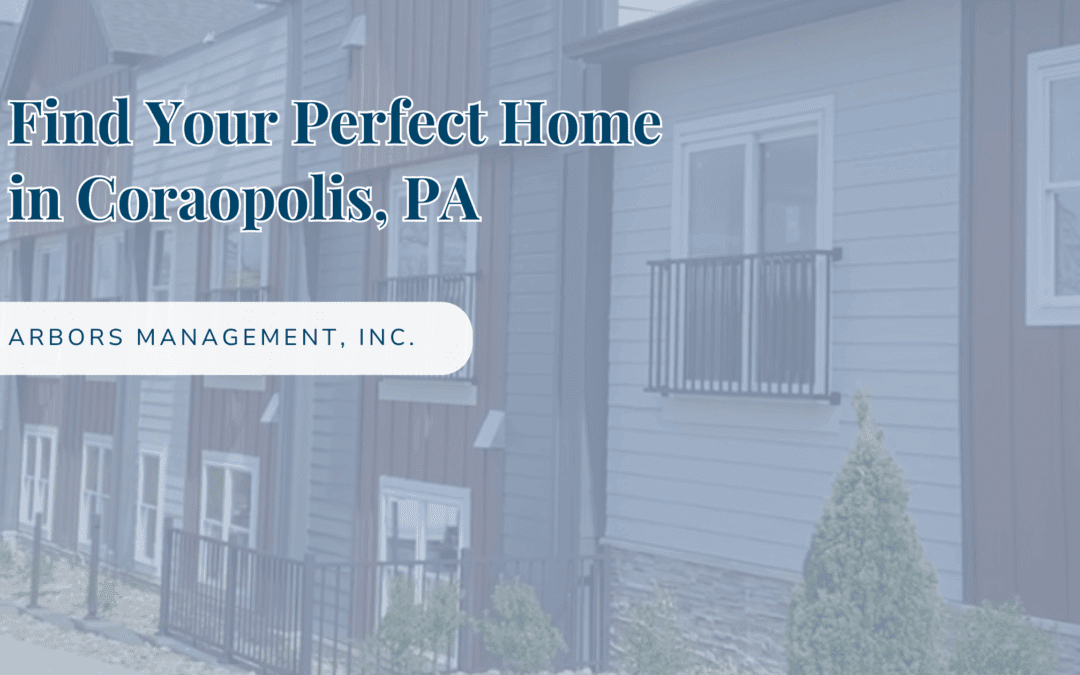
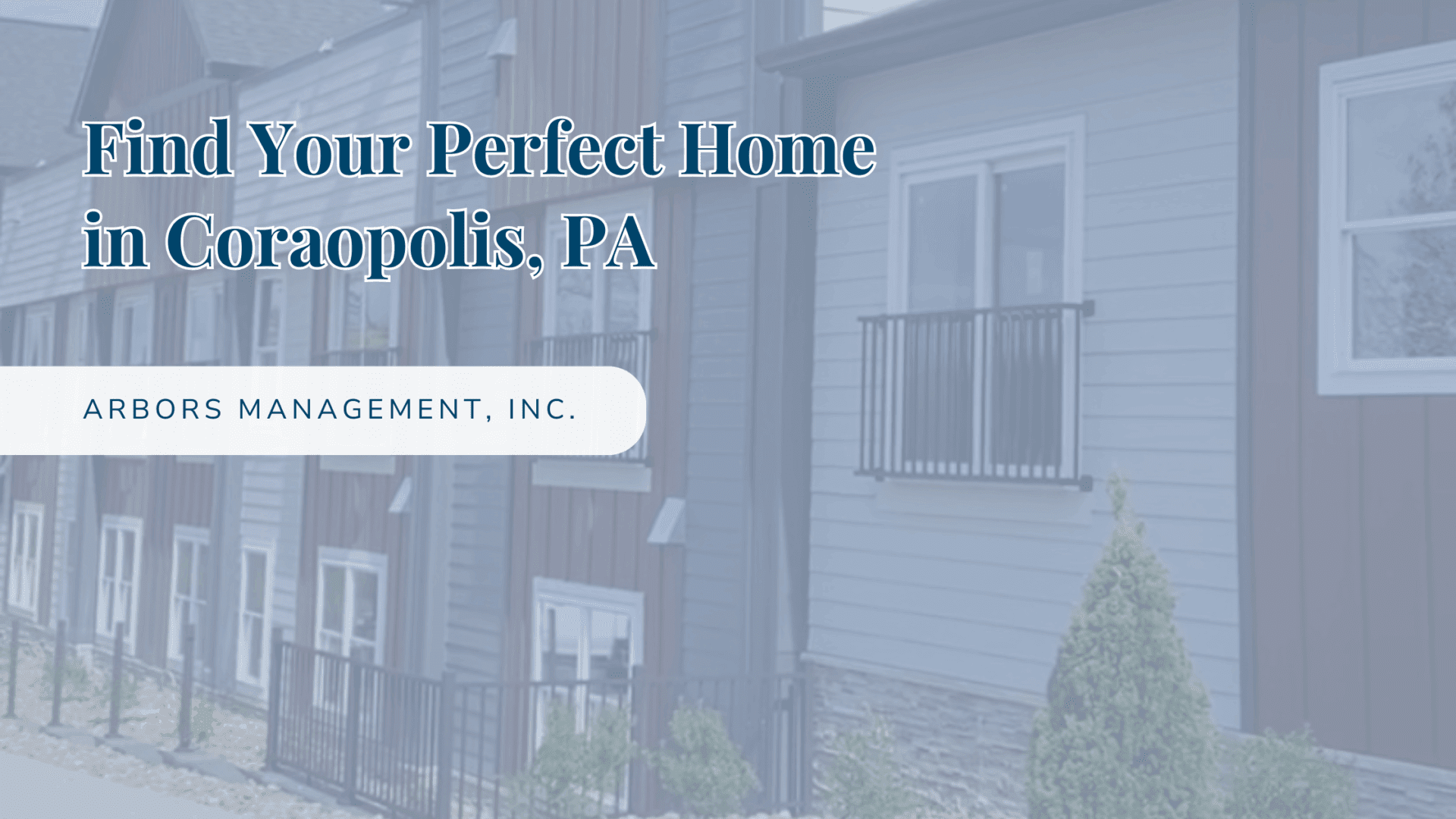
This beautifully renovated apartment building is a luxurious new addition to Coraopolis, PA, offering an opportunity you won’t want to miss. With 29 units available, here are some of the fantastic amenities you can enjoy:
- A modern gym
- Ample storage space
- An outdoor garden gazebo
- Indoor and outdoor security systems
- Striking 10-foot ceilings
- A private dog park
- And much more!
Conveniently located just 8 miles from Pittsburgh Airport, this property is ideally positioned in the business district, close to shops, restaurants, and various amenities!
We are excited to announce that we are now accepting applications and deposits. Don’t miss out on the opportunity to discover your perfect home! Reach out to Vivian, the Senior Portfolio Manager & Leasing Specialist at Gallery Gardens, Arbors Management, Inc.
📧 Email: VivianP@arbors.com
📲 Phone: 412-254-8056
Our Open House is coming up soon! Stay tuned and check out our Facebook page, Instagram, or website for further details.
by Andrea F | Aug 12, 2025 | Blog, Featured Posts, Investment Rental Property, Owner Resources, Property Management Education, Rent Collection, Rental Price
Investing in Real Estate? The Case for Professional Property Management
By: Andrea Faulk
Real estate investment is often heralded as an excellent avenue for generating passive income. However, the reality of being a landlord can quickly turn that “passive” income into an active and demanding endeavor. Managing properties involves a multitude of tasks that can be both time-consuming and stressful. This is where a professional property management company can become an invaluable asset for investors.
Here’s a deeper look into why experienced investors often choose to partner with property management experts:
1. Expertise and Efficiency for Optimal Returns
-
Tenant Screening and Placement: Finding reliable tenants is crucial. Property management companies use comprehensive screening processes, including background and credit checks, employment verification, and rental history evaluations, to ensure quality residents occupy your property.
-
Optimal Rental Pricing: Setting the right rent requires a delicate balance. Property management companies conduct thorough market analyses to competitively price rentals, maximizing income while minimizing vacancies.
-
Effective Marketing: Ensure that marketing reaches the right audience to successfully fill vacancies with the ideal candidates.
2. Time Savings and Stress Reduction
-
Delegating Day-to-Day Operations: Managing a property can feel like a second full-time job. A property management company handles everything from maintenance calls to rent collection, freeing up your time for other ventures.
-
Streamlined Processes: Property management companies establish efficient systems for rent collection, maintenance requests, and accounting. They often offer online portals for tenant payments and financial reporting.
-
Peace of Mind: Knowing professionals are handling all aspects of your investment offers peace of mind, allowing you to enjoy ownership benefits without the headaches.
3. Protecting Your Investment and Minimizing Risks
-
Legal Compliance: Landlord-tenant laws are complex and ever-changing. Property management companies stay informed on legal requirements, ensuring compliance and reducing the risk of costly lawsuits or penalties.
-
Preventive Maintenance: Regular inspections and proactive maintenance are vital for preserving property value. Property management companies schedule routine maintenance and address repairs promptly, often with access to discounted contractor rates.
-
Dealing with Difficult Situations: Property management companies have the experience to handle challenging situations like late rent payments or evictions, minimizing financial losses and emotional strain.
4. Enhanced Tenant Retention and Satisfaction
-
Prompt Responses to Needs: Quick response to tenant concerns and maintenance requests leads to higher tenant satisfaction and retention, reducing turnover and vacancies.
-
Improved Tenant Relations: Professional and consistent tenant interactions foster positive relationships, leading to longer tenancies and a stable income stream.
In summary, although self-management may seem like a cost-effective option, the time investment, legal liabilities, and risk of expensive errors can outweigh any perceived financial benefits. Engaging a professional property management company enables you to utilize their expertise, enhance operational efficiency, safeguard your investment, and optimize your returns, all while enjoying a more passive income stream. A property management company can truly become your most valuable asset.
If you need help managing your property, that’s what we’re here for! Please reach out to us at 1-800-963-1280 or at monroeville@arbors.com.
by Andrea F | Jun 18, 2025 | Blog, Featured Posts, Low Income Tax Credit Housing, Press Releases, Project Based Section 8 Housing
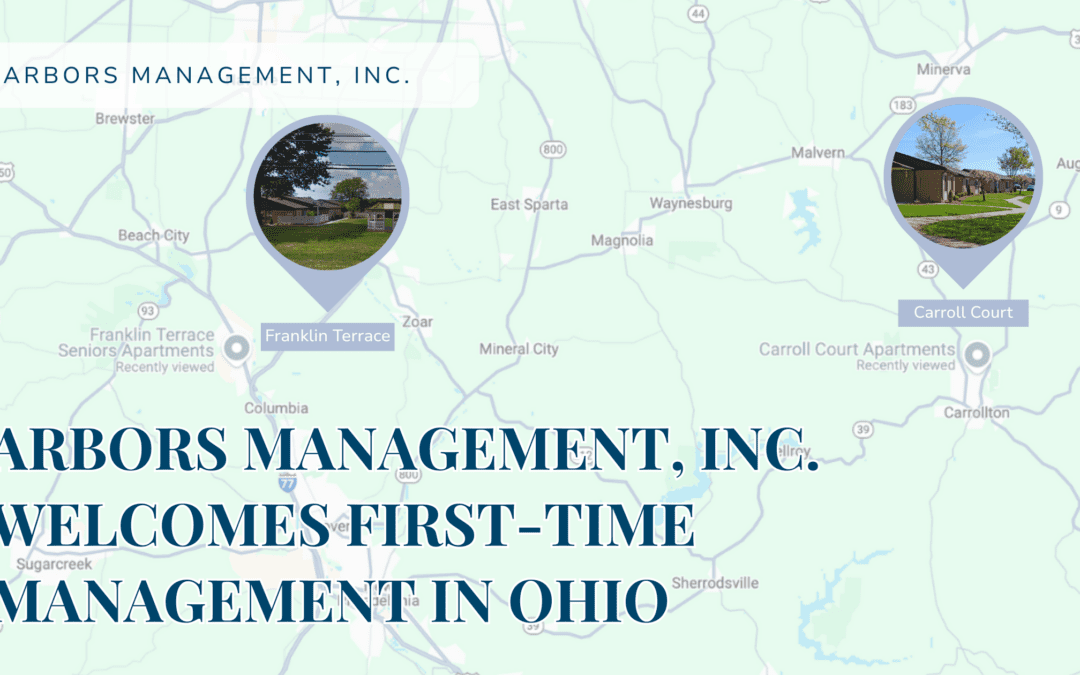
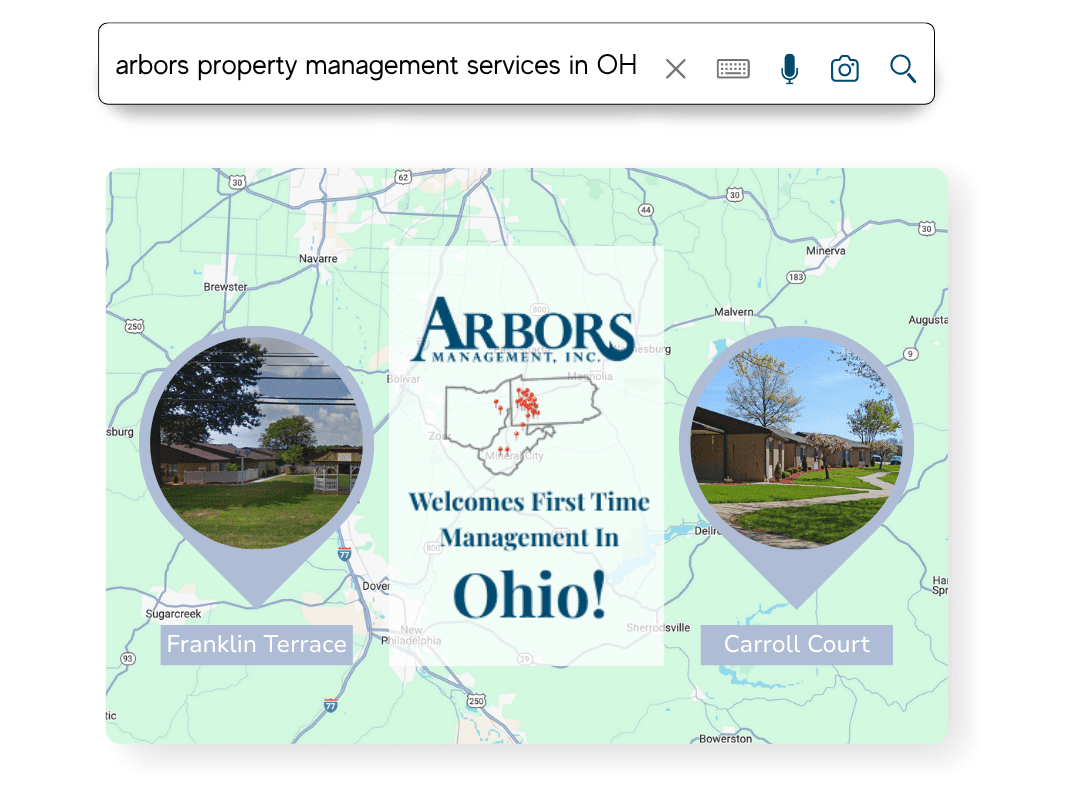
Arbors Management Expands to Ohio- We are thrilled to share the news of our recent management of two new Senior/Affordable Housing properties: Carroll Court and Franklin Terrace, situated in Carrollton and Strasburg, Ohio. This represents Arbors’ first management venture in the state of Ohio, and we are immensely proud of our continuous growth and accomplishments.
Situated in Carrollton, OH, Carroll Court features 60 single-story, garden-style units featuring one and two bedroom units. This property sits in a beautiful setting with a wonderful community building, and plenty of outdoor space, along with storage units for each apartment.
Just a short drive away, in Strasburg, Ohio, lies Franklin Terrace Senior Apartments. This community features garden-style units, offering a total of 79 one and two bedroom apartments. Each equipped with private patios perfect for relaxation, along with a spacious community room for gatherings.
With new ownership and management in place, these properties will undergo nearly $1.5 million dollars in upgrades over the coming twelve months including new roofs, new parking lots, new kitchens, accessibility upgrades, mechanical upgrades, community room upgrades, and more!
Since 1982, Arbors Management, Inc. has developed a portfolio of over 4,000 residential units, encompassing both Market-Rate and Affordable Housing, throughout Western PA and West Virginia, and now Ohio. We are eager to continue growing in all regions. Everyone at Arbors Management is excited about this expansion and looks forward to what the future holds!
If you’d like to explore how Arbors Management can help you manage your property, please visit our website to learn more about our services at our website.